

Community

Thankfulness That Isn’t Circumstantial

Give thanks in all circumstances; for this is God’s will for you in Christ Jesus.
— 1 Thessalonians 5:18

Life doesn’t always go the way we expect.
Sometimes, the prayers we pray aren’t answered how we hoped.
Sometimes, doors close that we thought would open.
And sometimes, we’re left standing in the in-between—trusting that God’s goodness is still true, even when we can’t see it yet.

It’s in those moments that our gratitude is tested.

It’s one thing to be thankful when life feels good—when prayers are answered, relationships are strong, and things seem to fall into place. But the real transformation happens when we learn to give thanks not because life is perfect, but because God is faithful.


Gratitude That’s Grounded, Not Fragile

Circumstantial thankfulness is fragile—it sways with our emotions and depends on outcomes.
But gratitude that’s rooted in God’s character? That’s unshakable.

When we understand that gratitude isn’t about pretending everything is okay, but about trusting the One who is okay, everything shifts.

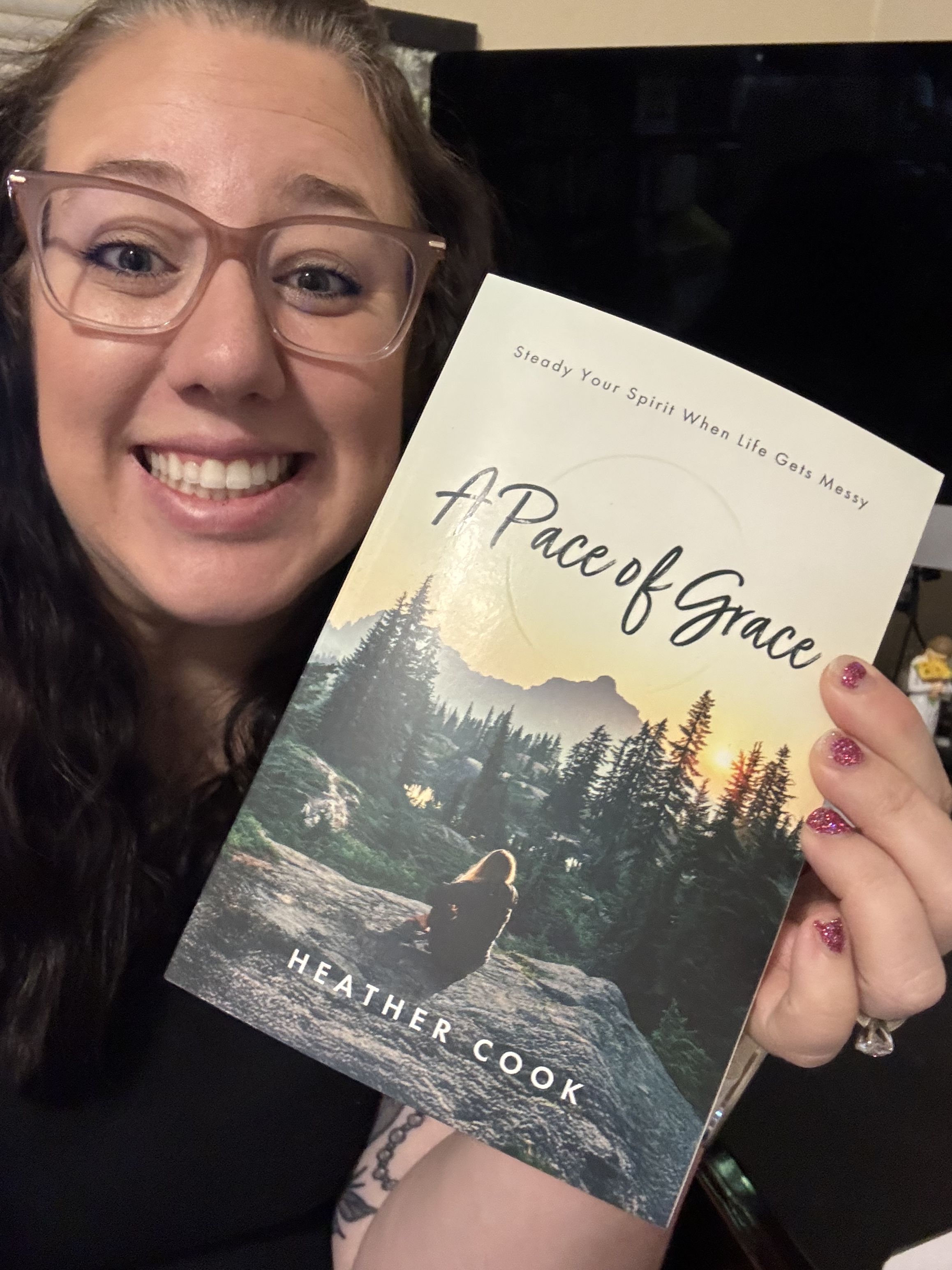
In A Pace of Grace, I talk about what it means to live anchored in who God is, rather than what we do or what we have. This is that same kind of anchoring—it’s the kind of gratitude that says,

“Even when I don’t feel it, even when I don’t see it—You are still worthy of my thanks.”

That kind of thankfulness grows deep roots. It’s not surface-level or seasonal; it’s spiritual. It endures storms because it’s planted in the soil of God’s faithfulness.


When Gratitude Feels Out of Reach

There have been times in my life when gratitude didn’t come naturally—when it felt like a discipline rather than a delight.

In those seasons, I learned that sometimes the most powerful prayers are the simplest ones:

“Lord, help me to see You here.”

Because gratitude isn’t about ignoring the pain; it’s about acknowledging God’s presence within it.
It’s saying, “Even in this, I know You are good.”

Paul’s words in 1 Thessalonians 5:18 don’t tell us to give thanks for all circumstances, but in them. There’s a big difference. Gratitude doesn’t mean we’re thankful for loss, pain, or confusion—it means we’re choosing to trust that God’s goodness hasn’t changed, even when our situation has.


The Steadiness of God’s Character

When everything else in life shifts, God remains steady.
His love doesn’t depend on our performance. His grace doesn’t run dry. His faithfulness doesn’t falter with our circumstances.

When we root our thankfulness in who He is, we find a steadiness that no situation can shake.

This kind of gratitude looks like peace in the middle of uncertainty.
It looks like worship in the waiting.
It looks like hope in the heartbreak.

Because when our gratitude is anchored in God’s character, we can face anything and still say, “It is well with my soul.”


The Practice of Steady Gratitude

One of the ways I’ve learned to nurture this kind of thankfulness is through stillness—slowing down enough to notice the small reminders of God’s presence.

It’s easy to overlook them when life feels heavy:
The quiet sunrise that whispers new mercy.
The unexpected text that lifts your spirit.
The Scripture verse that meets you exactly where you are.

Gratitude in hard seasons often starts with something small—one whispered “thank You” that grows into another.

When we take time to pause, to reflect, and to remember His goodness, it realigns our hearts.
Even when circumstances shift, our confidence in His love does not.


A Gentle Challenge

This week, take a moment to reflect:

  • What are you thankful for that has nothing to do with your circumstances?

  • How has God shown Himself faithful, even when life didn’t go as planned?

  • Where have you seen His steady hand at work in your story lately?

Write them down. Speak them out loud. Share them with someone else.
Because gratitude that’s spoken has power—it changes the atmosphere around us and reminds our hearts of what’s true.


A Prayer of Thankfulness

Lord, thank You that my gratitude doesn’t depend on what’s happening around me, but on who You are within me.
Thank You that Your love never fails, Your promises never change, and Your presence never leaves.
Teach me to be thankful in every circumstance—to trust that You are good, even when life feels uncertain.
Let my heart remain steady in Your faithfulness, and may my gratitude become a reflection of Your grace.
Amen.


🌿 A Place to Belong

If you’re learning to cultivate this kind of steady gratitude—one that’s rooted in who God is, not what’s happening around you—we’d love to walk with you. Join our community of women who are learning to live with thankful hearts, no matter the season.
👉 Join our Facebook community here.

Thankfulness That Brings Abundance

“You crown the year with Your goodness, and Your paths overflow with abundance.”
— Psalm 65:11

There’s something about gratitude that changes the way we see everything.
When we start to notice God’s fingerprints in the everyday moments—our morning coffee, a child’s laughter, a sunset after a long day—our hearts begin to shift. What once felt small starts to feel sacred. What once felt ordinary becomes evidence of God’s extraordinary grace.

It’s not that life suddenly gets easier. It’s that our perspective changes.
Because when gratitude fills our hearts, scarcity loses its grip.


The Mindset of Scarcity vs. the Posture of Gratitude

For a long time, I lived with a quiet sense of scarcity—always feeling like I needed to do more, be more, have more. I’d look at others’ success or blessings and feel like mine didn’t measure up.

But here’s what I’ve learned: gratitude and comparison can’t coexist.
When you’re truly thankful, you stop counting what’s missing and start celebrating what’s already there.

Psalm 65:11 says, “You crown the year with Your goodness, and Your paths overflow with abundance.” That word overflow paints such a vivid picture—it’s not a trickle of blessing, it’s a river. God’s goodness doesn’t run out; it keeps flowing, even when we can’t see it.

When we live with gratitude, we begin to recognize that abundance isn’t always about having more—it’s about realizing we already have enough.


Gratitude Multiplies What We Have

There’s a story in John 6 that I come back to often—the feeding of the five thousand. A young boy offered his small lunch of five loaves and two fish, and Jesus gave thanks.

That’s it. He gave thanks.
And what was small became more than enough.

It’s such a simple but powerful reminder: gratitude multiplies.
When we place what we have in God’s hands and thank Him for it, He transforms it into abundance—whether that’s time, energy, finances, or opportunities.

I’ve seen this in my own life again and again. Times when I’ve felt stretched thin or unsure how I’d manage, and yet God met every need—sometimes through provision, sometimes through peace.

Abundance isn’t just what’s in our hands. It’s what God does with our open hearts.


When Gratitude Leads to Obedience

In A Pace of Grace, I talk about how gratitude and obedience are deeply connected. When we recognize all that God has done for us, our natural response is to live from a place of trust and surrender.

Obedience becomes less about striving and more about aligning our hearts with His goodness.
We stop asking, “What if I give this up?” and start saying, “How could I not, after all He’s given me?”

Gratitude changes how we approach our callings, our work, and even our waiting seasons.
It turns our focus from “I have to” to “I get to.”
And in that shift, joy begins to bloom.


Abundance Isn’t Always What We Expect

Sometimes abundance looks like answered prayers and doors opening wide. Other times, it looks like peace in the middle of what feels like lack.

True abundance isn’t measured by what’s in your bank account or on your calendar. It’s measured by the fullness of your soul.

You might be in a season where everything feels uncertain—where resources are tight or dreams are delayed. But even there, God’s goodness is not absent. It might be showing up in small ways: a text from a friend, a moment of laughter, a breath of calm in the middle of chaos.

When we begin to thank God for those moments, we start to see that abundance has been surrounding us all along.


A Gentle Challenge

This week, I want to invite you to practice abundance thinking.
Instead of focusing on what’s missing, take a moment each day to write down what you already have.

Maybe it’s the comfort of home, the joy of family, the gift of health, or the peace that comes from knowing Jesus.

Ask yourself:

  • Where have I seen God’s goodness this week?

  • What can I thank Him for right now, even before I see the outcome?

  • How can I use what I already have to bless someone else?

Gratitude isn’t passive—it’s active. The more we thank God, the more aware we become of His presence in our daily lives. And that awareness is where true abundance begins.


A Prayer of Thankfulness

Lord, thank You for Your goodness that never runs out.
Teach me to see abundance not as more things, but as more of You.
Help me recognize the blessings You’ve already placed in my life and to hold them with open hands.
Let gratitude shape my days and overflow from my heart, so that others may see Your goodness through me.
Amen.


🌿 A Place to Belong

If you’re longing to live from a place of abundance and gratitude, we’d love to walk with you. Our community of women encourages one another to notice God’s goodness in every season and to live rooted in His grace.
👉 Join our Facebook community here.

Thankful Even When Our Hearts Are Broken

“The Lord is close to the brokenhearted and saves those who are crushed in spirit.”
— Psalm 34:18

There’s a strange kind of quiet that comes after loss—when the familiar rhythms of your days suddenly stop, and you’re left standing in the stillness, wondering what comes next.

I remember sitting at my desk for the last time after losing a job I deeply loved. It wasn’t just a job to me—it was a calling, a place where I had poured out my heart, my time, and my prayers. When it was gone, I felt like a part of my identity had been stripped away.

Everything that once felt steady now felt uncertain. I tried to hold it together, to trust that God had a plan, but my heart was heavy. Gratitude felt far away—almost out of reach.

And yet, it was in that broken place that I began to learn what true thankfulness really means.


Gratitude Isn’t Denial—It’s Trust

When our hearts are broken, we often think gratitude means pretending everything is fine. But biblical gratitude isn’t denial; it’s trust.

It’s saying, “God, I don’t understand this, but I believe You’re still good.”
It’s choosing to thank Him not for the pain, but in it.

When I lost my job, I felt disoriented. I didn’t realize how much of my worth I had unknowingly attached to what I did instead of who I was in Christ. It was humbling and painful, but it was also holy. Because in the stripping away, God began rebuilding my foundation on something stronger—Himself.

As I wrestled through disappointment, I found comfort in Psalm 34:18: “The Lord is close to the brokenhearted.” Those words reminded me that even when everything else felt distant, God wasn’t. He was right there, in the tears, the questions, and the quiet.


The Gift Hidden in the Loss

Looking back now, I can see that losing that job wasn’t the end—it was the beginning of something new. But I couldn’t see that at the time.

All I could see was what was gone.
What I didn’t know was that God was already writing the next chapter, one that would lead to deeper healing, clearer calling, and renewed trust.

The space I thought was empty was actually fertile ground.
It was the soil where God would grow new things—ministries, relationships, and opportunities I never would have pursued if I had stayed where I was comfortable.

Sometimes, gratitude begins not with joy but with surrender.
It’s a whispered, “Lord, even here… I thank You.”


When Gratitude Feels Like a Sacrifice

Hebrews 13:15 calls us to offer a “sacrifice of praise.”
That word—sacrifice—means it will cost us something.

When we’re heartbroken, thankfulness doesn’t come naturally. It requires faith. It’s a conscious choice to look for God’s hand even when we can’t see His plan.

During that season, I remember journaling prayers that were half tears and half thanks. I didn’t have answers, but I had Jesus. And somehow, that became enough.

The more I practiced gratitude, the more I realized it wasn’t changing my circumstances—it was changing me. My prayers shifted from “Why, God?” to “What are You showing me here?”

Gratitude began to soften the ache. It didn’t erase it, but it gave it purpose.


Thankfulness in the Midst of Becoming

In A Pace of Grace, I write about how God often meets us in the middle of our becoming—in the moments when life feels uncertain, but our faith is being stretched. This was one of those seasons.

Losing that job forced me to slow down, to listen, and to let God remind me that my value wasn’t in my title or productivity—it was in being His daughter.

I think that’s what gratitude does—it reorients our hearts. It pulls us out of the fog of self-pity and into the light of His presence. It reminds us that even when life feels broken, God is still working beauty into the pieces.

And isn’t that the heart of thanksgiving? Not that everything goes our way, but that we recognize God’s goodness hasn’t changed even when our world has.


A Gentle Challenge

This week, if your heart feels heavy, I want to encourage you to pause and ask:
Where can I thank God right here?

It might not be for what happened, but maybe you can thank Him for His nearness.
For the lessons you’re learning.
For the people who’ve walked beside you.
For the quiet that allows you to hear His voice again.

Write it down. Speak it out loud. Pray it through tears if you need to.

Because even in heartbreak, gratitude grows hope—and hope is what keeps us moving forward with faith.


A Prayer of Thankfulness

Lord, thank You for meeting me in the broken places.
Thank You that even when I don’t understand, You are still good, still near, still working.
Teach me to see Your hand in the hard things and to offer You my gratitude even when it feels costly.
Help me to trust that You are writing beauty into this story, one line at a time.
Amen.


🌿 A Place to Belong

If you’re walking through a hard season and need encouragement, you’re not alone. Our community of women is a space to find hope, healing, and connection. Come join us as we walk through life together and learn to see God’s goodness—no matter what season we’re in.
👉 Join our Facebook community here.

Thankful for the People God Brings into Our Lives

“I thank my God every time I remember you.”
— Philippians 1:3

There are people who cross our paths and leave a mark so deep that it changes the shape of who we are. Some walk with us for years, their presence steady and familiar—others show up for only a season but leave fingerprints of grace on our hearts. And often, we don’t recognize their significance until much later, when we look back and realize how intentionally God placed them in our story.

I’ve learned that community isn’t something we accidentally stumble into. It’s something God builds, one person at a time.


When God Uses People as His Hands and Feet

There have been seasons in my life when I’ve prayed for direction or encouragement—and instead of an immediate answer, God sent a person.
A text came at just the right moment.
A friend showed up with coffee and conversation.
A mentor spoke truth that I didn’t necessarily want to hear but needed to receive.

Sometimes His presence looks like a person sitting beside you, listening without trying to fix anything.

Paul understood this kind of gratitude. His letters to the churches overflow with appreciation—not just for what the believers did, but for who they were. “I thank my God every time I remember you.” It wasn’t about grand gestures; it was about their faith, their prayers, their partnership in the gospel. Their lives reminded him of God’s faithfulness.

When we look around at the people in our own lives—the ones praying with us, walking with us, challenging us—it’s an invitation to pause and thank God. These relationships are evidence that He sees us.


Some People Are Meant to Stay, Others to Shape

Not every relationship will last a lifetime. Some are meant for a season, designed to guide, stretch, or even sanctify us.
And that’s okay.

There’s beauty in recognizing that not every person who comes into your life is meant to stay forever. Some are sent to remind you of who you are in Christ. Some are there to walk you through a specific chapter, and others may only stay long enough to point you back toward God.

We often grieve when relationships shift or end, but I’ve learned that even those moments hold gratitude. Because when you trace God’s hand through your story, you’ll often find that He was weaving purpose into every introduction, every goodbye, and every in-between moment.


Gratitude for the Ones Who Walk Beside You

Think of the people who have been spiritual anchors in your life—those who prayed with you when you couldn’t find words, who celebrated your wins, or who gently held space for your pain.
Those people are gifts.

Sometimes it’s easy to overlook the ones who are consistent—the friends who check in, the small group that prays, the mentor who listens without judgment. Yet these steady relationships often carry us through seasons when we might have otherwise given up.

When we stop to thank God for them, it shifts our hearts from expecting to appreciating. It reminds us that we’re not meant to walk this life alone.


When Gratitude Builds Community

In A Pace of Grace, I write about the beauty of living in authentic community—about how vulnerability is what turns acquaintances into sisters and fellowship into family. True community happens when we choose to see one another fully, to celebrate each other’s wins without comparison, and to stand with each other through hardship.

Gratitude is what fuels that kind of connection.
When we thank God for one another, we start to see people the way He does: as image-bearers, as stories in progress, as reflections of His grace.

It’s no coincidence that so many of Paul’s letters start with thanksgiving. Gratitude has a way of softening our hearts toward one another, even in disagreement or distance. When we practice it, we reflect the heart of Christ—who saw people not for what they could give Him, but for who they were becoming through Him.


A Gentle Challenge

This week, I want to invite you to take a few minutes and thank God for the people He’s placed in your life.

Maybe it’s a longtime friend who has seen every side of you and loves you anyway.
Maybe it’s a mentor who helped you grow when you were unsure of your next step.
Or maybe it’s someone who challenged you to heal, to stretch, or to step out in faith.

Write their names down.
Pray for them.
And if you can, tell them.

There’s power in letting someone know that they’ve made a difference—that their obedience to God’s prompting mattered. You never know how much those words might mean to someone who’s been faithfully showing up.


A Prayer of Thankfulness

Lord, thank You for the people You’ve placed in my life.
Thank You for the ones who walk beside me, for those who challenge me, and for those who remind me of Your love.
Help me to see every relationship as a reflection of Your grace.
When I’m tempted to take people for granted, remind me to pause and give thanks.
And when relationships shift or fade, help me trust that You are still writing my story with purpose and care.
Amen.


Reflection Prompt:

  • Who are three people you can thank God for this week?

  • What would it look like to express that gratitude—through a note, a message, or a prayer?


🌿 A Place to Belong

If you’re longing for connection or looking for a community of women who love Jesus and cheer one another on, we’d love for you to join us. Come be part of the conversation, find encouragement, and grow with other women who are walking this journey, too.

👉 Join our Facebook community here: www.facebook.com/groups/asisterhoodofgrace