
Discover how simple spiritual rhythms and a Rule of Life can help you create space for God, grow in faith, and find peace in everyday life.

Discover how simple spiritual rhythms and a Rule of Life can help you create space for God, grow in faith, and find peace in everyday life.
Discover how to find your identity in Christ instead of productivity and learn why true rest begins with knowing whose you are.
Remember the slow summers of childhood? Discover how choosing presence over pressure can help you embrace a more restful, intentional summer with Jesus.
Seven years ago, in 2019, I felt the Lord whisper something to my heart:
“You will write a book and a ministry will be born from it.”
At the time, I had no roadmap. No publishing plan. No strategy deck. Just a quiet nudge and a simple invitation to obey. And so I did the only thing I knew how to do — I started saying yes.
Yes to early mornings. Yes to writing when no one was reading. Yes to refining and rewriting. Yes to surrender when I didn’t see the full picture.
This last year, especially, has been one of the hardest of my life. There were moments I questioned myself. Moments I wondered if I had heard God clearly. Moments that felt like pruning more than progress.
But here’s what I’m seeing now: God was constructing something far beyond what I could see.
It’s not just the book or a ministry. It’s a message from my heart born from lived experience.
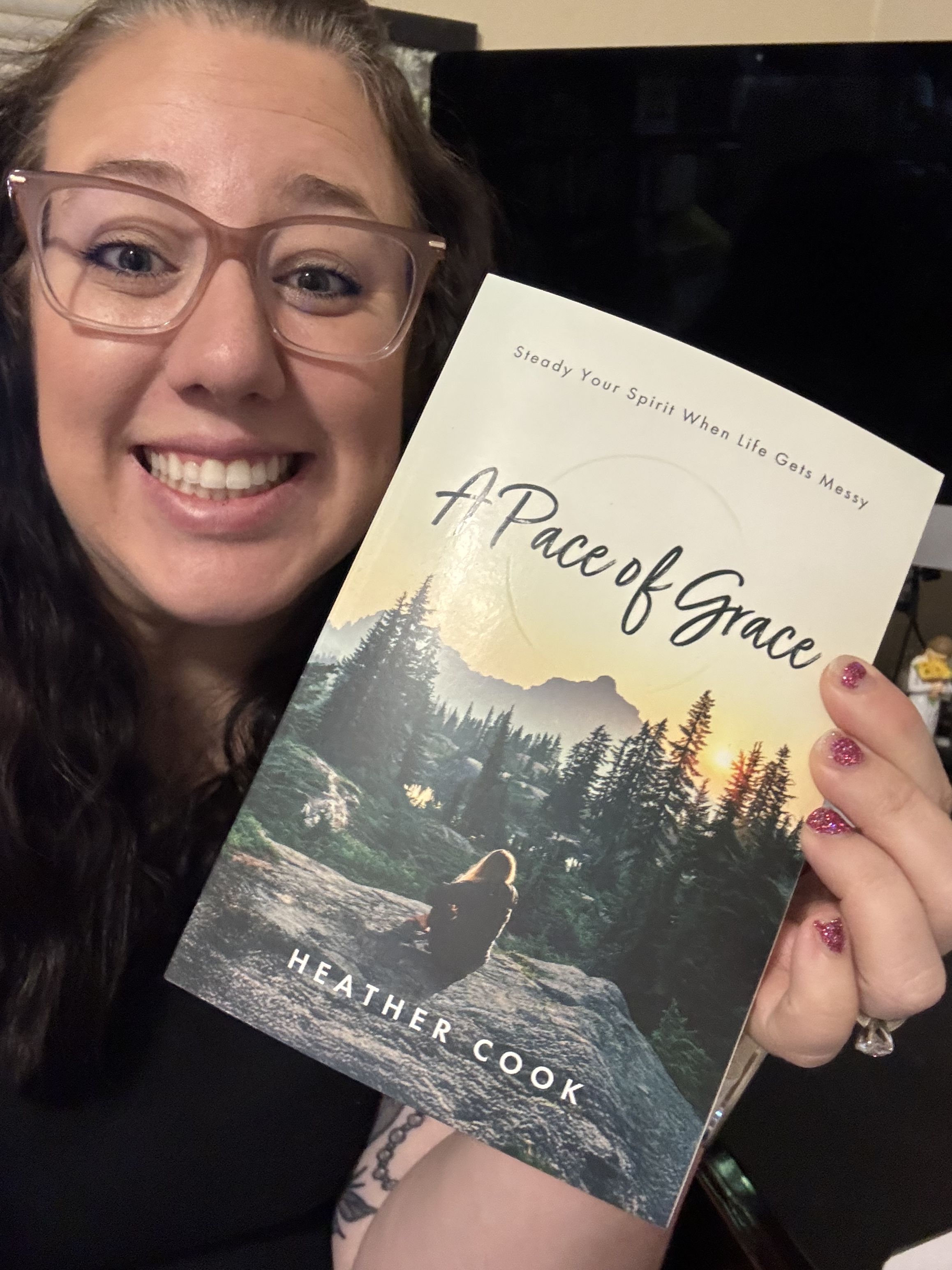
A Pace of Grace: Steady Your Spirit When Life Gets Messy was not written from a place of having it all figured out but written in that messy middle. In the tension between a full calendar and a worn out spirit. Knowing there is more to this life in Christ than what I was living. It was written in the wrestling of identity and in the quiet spaces where God gently reminds us who we are.
This book is:
• Rooted identity — knowing you are a daughter before you are anything else
• Stillness in a noisy world
• Letting go of hustle and embracing grace
• Finding joy in ordinary moments
• Choosing obedience when the outcome is unclear
• Building real, life-giving community
It is an invitation to slow down enough to hear God’s voice. It is trading anxiety for God’s steadiness.
It is a place to focus on Jesus’ pace that’s shaped by grace instead of cultural pressures. And it’s a reminder to remember that messy seasons are not wasted ones.
What excites me most this week isn’t that a book is releasing, it’s that God continues to keep His promises.
A vision He gave me in 2019, is finally coming to fruition. 7 years later… And through it all, He sustained me. Through seasons of uncertainty, He sustained me. He refined the message through real life — through motherhood, ministry shifts, disappointment, healing, and joy.
I did not muscle this message into existence. I showed up when I didn’t think I had it in me. I listened. I followed. I surrendered. I obeyed. And He built it!
When I didn’t know how it would come together, He told me the next thing. When I had no idea what to write, I would hear the gentle nudge of “write that down”. I’m in awe of how He used me in this. A simple yes — That alone feels like a miracle.
If you are in a season that feels messy…
If you feel stretched thin but still know you are called…
If you are tired of striving and ready to breathe again…
This book is for you.
My prayer is that when you hold these pages, you feel seen.
That your shoulders relax.
That your spirit steadies.
That you are reminded you are rooted in Christ — and from that place, you can radiate His beauty.
A Pace of Grace releases Tuesday, and I could not be more grateful for the journey that brought it here.
If you’d like to learn more or grab your copy, you can find all the details here:
A Pace of Grace - Steady Your Spirit When Life Gets Messy
Thank you for being part of this story. Truly.
Love & Blessings,
Heather 🤍
Rooted in Christ. Radiating His beauty. 🌻
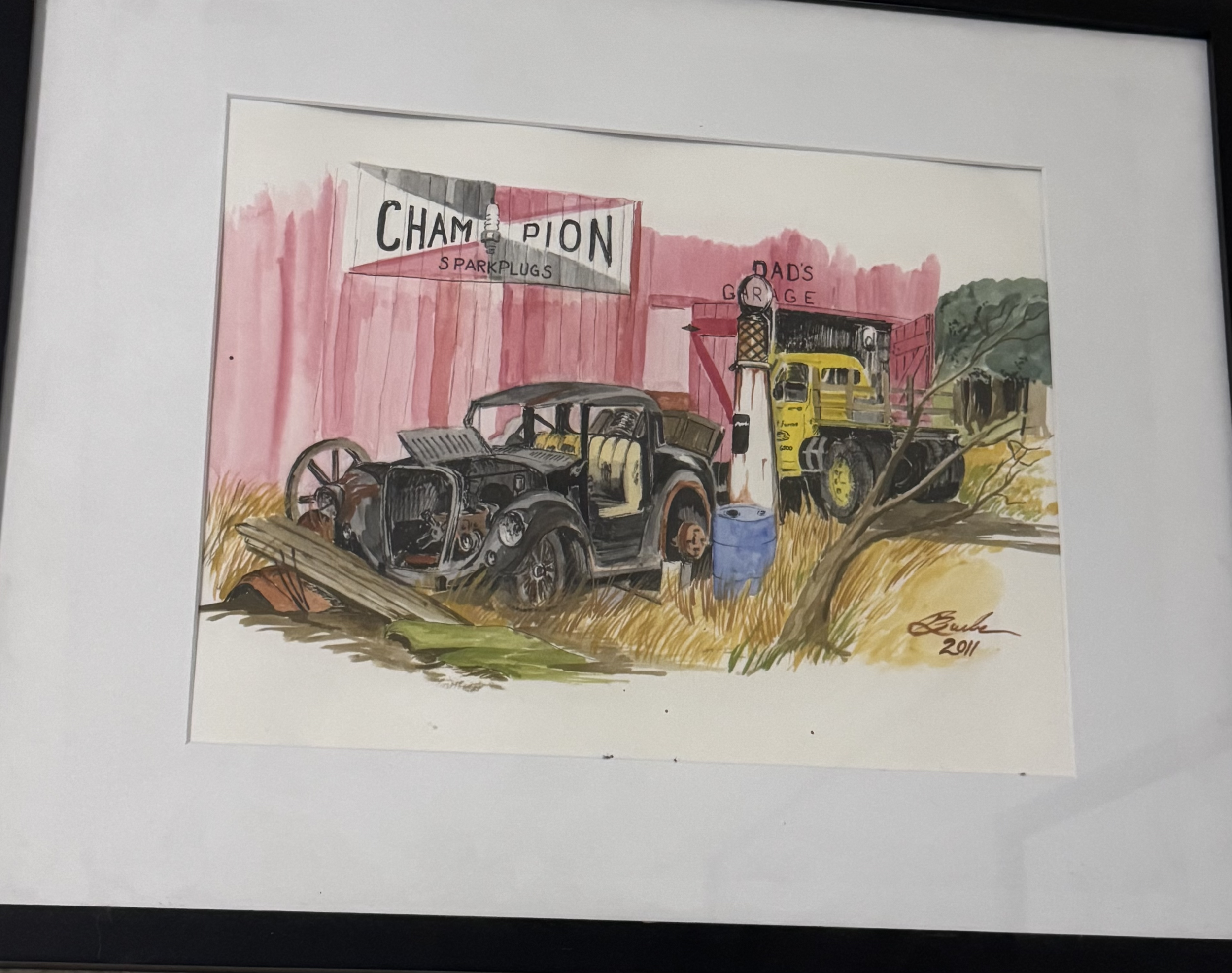
There’s a picture that hangs in my home office.
It’s one that stands out because it doesn’t quite fit the space, but it’s something I cherish deeply.
My uncle drew it for me.
It’s a picture of a junked old car.
When I asked him to draw something to hang in my office years ago, he had the best idea. He told me he was going to create a series of four drawings for my new office. At the time, I had just been promoted to marketing manager in the auto industry, and I was so excited. He was proud of me in the way only an uncle can be.
I grew up in a family that loved anything with motors, so the idea felt personal and perfect.
But after the first drawing, everything changed.
My uncle suffered a massive heart attack. He told me he would start the second one soon, but then came the testing, surgeries, and eventually heart failure. The man with the biggest heart and the most contagious love for people was suddenly gone, now with Jesus.
And I have the picture he drew hanging on my wall.
Sometimes I’ll just sit and study it.
Every time I look, I notice something new.
Recently, what caught my attention was the car itself. It looked discarded. Rusted. Forgotten. The kind of thing people pass by without noticing. But then I saw where it was sitting — outside “dad’s garage.”
And it made me pause.
Because maybe it wasn’t abandoned after all.
Maybe it was waiting.
Waiting for the right moment.
Waiting for restoration.
Waiting for someone to see what it could become again.
And isn’t that so often our story, too?
There are seasons when we feel set aside. Seasons where parts of our story feel rusted, unfinished, or forgotten. We wonder if the dream, the calling, or even pieces of our identity were left behind somewhere along the way.
But our Heavenly Father knows exactly where we are.
Even when we feel unseen or worn down, God sees us. He holds our stories with care and perfect timing. Scripture reminds us that He is making all things new. Not rushed or forced, but restored in His timing and for His glory.
Just like that car sitting outside the garage, we are never outside His reach.
I may not have the rest of the drawing series my uncle imagined, but I treasure this one deeply. It reminds me that unfinished does not mean forgotten. It reminds me that beauty can still be found in what feels incomplete.
My uncle was a storyteller. He loved people, loved books, and introduced me to classics at a young age. His love for stories shaped me more than I realized at the time.
And now, as I prepare to release a book of my own, there’s a quiet ache in knowing I can’t hand him a copy. I can’t hear his thoughts or see that proud smile. But I carry his influence in every word I write.
And maybe that’s part of restoration too.
The stories poured into us don’t end.
They ripple forward.
They become part of the beauty God continues to write.
So today, as I sit beneath this cherished drawing, I’m reminded that God is still working. Still restoring. Still telling a story — in me, in you, and in every unfinished place we carry.
Nothing is wasted.
Nothing is unseen.
And in His hands, even what feels discarded becomes a testimony of redemption.
What part of your story feels unfinished right now?
What if it isn’t abandoned… but waiting in the hands of a God who restores?
If this story encouraged you today, I’d love to keep walking together.
My book, A Pace of Grace: Steadying Your Spirit When Life Gets Messy, is filled with reflections just like this — honest stories, gentle reminders of God’s presence, and practical ways to slow down and rest in Him.
If you’re longing for peace in the middle of real life, this book was written with you in mind.
👉 Learn more or grab your copy here: https://amzn.to/47aR4Ab
Thank you for being here, for reading, and for letting me share pieces of my story with you.
I was talking with a friend recently about something that keeps catching my attention.
It’s the theme of “joy”.
A friend is painting something beautiful centered around it.
Another is releasing her very first song anchored in Nehemiah 8:10.
Books are coming out with joy woven through the pages.
Conversations keep circling back to it.
It’s even in the book I have coming out March 10th!
It’s everywhere right now! I’m loving it!
And I just keep thinking… What is God doing?
When the same theme starts rising in different spaces, through different people, who don’t all know each other… I don’t think that’s random. I can’t help but wonder what is in store for the people of God when this is the common thread being woven together by the Creator of the universe.
It feels like preparation. Not hype or surface-level positivity… But something deeper… steadier.
And honestly, that’s why I wrote about it in A Pace of Grace.
Life isn’t easy and Trials and hardships will come to each of us. But there is good news, my friends: the joy of the Lord is not dependent on our circumstances. Joy in the Lord flows from the Holy Spirit within us.
Life is full of both mountaintops and valleys; yet the joy that can only come from the Lord remains constant. Scripture reminds us, “The joy of the Lord is your strength!” (Nehemiah 8:10). This is a deep, sustaining joy that steadies us even in hardship.
When trials come, we don’t have to pretend they don’t hurt. Instead, we lean into a God who promises His presence, peace, and strength. That’s the part I love.
There isn’t a need to pretend or fake it. We don’t slap a Bible verse on pain and call it healed. Joy is not denial. It’s anchoring. Paul wrote, “Rejoice in the Lord always” (Philippians 4:4) — and he wrote that from prison. His rejoicing didn’t mean chains weren’t real. It meant God was bigger than them. That feels so important in this season.
Joy is not the same thing as happiness. Happiness comes and goes. It rises and falls with circumstances. It’s tied to outcomes. Joy is different. Joy is a fruit of the Spirit because it comes from the Lord. It cannot be created or willed into existence.
Joy is knowing God is faithful even when you don’t understand the storyline. Joy is being able to whisper, “It is well with my soul,” while still admitting, “This is hard.” Pain and joy can sit at the same table.
And I wonder if that’s what God is strengthening in His people right now; a steady, Spirit-formed joy that can hold weight. Maybe we’re being prepared. Maybe joy is the foundation for what’s coming next. Maybe before new assignments, new doors, new growth… He is rooting us deeper. And if that’s true, I want it!
I want to be rooted in Christ.
I want to radiate His beauty.
I want to walk into whatever is next with a spirit that is steady — not because life is calm, but because He is.
If you’ve been sensing this theme too… lean in. Pay attention. Ask Him what He’s strengthening in you… And the surrender and walk in obedience! “For his anger lasts only a moment, but his favor lasts a lifetime! Weeping may last through the night, but joy comes with the morning.” Psalms 30:5 NLT
If you’re longing for that kind of steady joy, that’s exactly why I wrote A Pace of Grace: Steadying Your Spirit When Life Is Messy.
This book isn’t about trying harder or smiling through chaos. It’s about learning to anchor your heart in truth when everything around you feels uncertain.
If this message resonates, I’d love for you to grab a copy. You can find it here:
https://amzn.to/4auvrM0
I’m speaking at the Faith in the Little Years Summit on Day 3, Sunday, March 8th at 10AM EST about Grace in the Chaos: Seeking God when Motherhood feels overwhelming. You’re invited!
Get all the details and grab your free ticket here https://heyheather--amanda-stores.thrivecart.com/raising-littles-with-purpose-pack-after/698cdf409b368/ !
Healing isn’t linear.
It doesn’t move in neat, forward-facing lines. It loops and circles back. It surprises you in ordinary moments. And sometimes, grief hits differently depending on the season you’re in.
On February 13, 2001, my grandma passed away.
I was in sixth grade, getting ready for our Valentine’s Day party at school. At the time, I loved Valentine’s Day. I loved the pink cards, the candy hearts, the joy of it all. But that day changed everything for me… in more ways than one.
For years afterward, Valentine’s Day wasn’t sweet. It was left as a reminder of my broken heart. A day that carried sorrow instead of the excitement it once had. Grief has a way of attaching itself to dates on a calendar, right? Even when life keeps moving, those dates can stop you in your tracks.
Over time, I found myself caring less about the holiday. It just didn’t feel important anymore.
But healing has a way of showing up in unexpected places.
When I started dating my husband, he made it a point to get me flowers every Valentine’s Day. I love flowers. Always have. But it wasn’t just about the bouquet. It was about the consistency. The way he honored something that had become complicated for me.
His steady love began healing something in me that I didn’t even realize still needed healing.
Later, when we found out we were pregnant with our first child (a girl), I shared a memory from my childhood that meant so much to me. Every Valentine’s Day, my dad would get my mom flowers… and he would get me flowers too. It was a sweet reminder that I had a dad that loved me and thought of me, even when he didn’t have to… since he married my mom when I was 6 years old.
My husband loved that tradition immediately. He has carried it on for our girls ever since. He is such a gift as a girl dad. Watching him hand them flowers each year feels like watching legacy unfold in real time.
And then came another layer of redemption.
I began something that started small as a galentines tea. It has now become Galentine’s Day Brunch and my girls look forward to it each year. This has offered a sweet redemption to January 13th, a date that used to make me curl up in a blanket and wait for the day to pass.
Every year, I set the table with intention. I set & decorate the table. I prepare the food. I set out a special game or craft. And as I do, I feel something holy happening in the chaos of my kitchen.
What was once a day I dreaded has become a day I prepare for with joy.
Fifteen years later, here I am — setting a table on a date that once marked heartbreak.
Healing isn’t linear.
Sometimes it looks like tears.
Sometimes it looks like flowers.
Sometimes it looks like a beautifully set table filled with little girls laughing.
God is so kind in the way He redeems our stories. He doesn’t erase the loss. He doesn’t pretend the grief didn’t happen. But He weaves beauty into it. He plants new memories where old pain used to live.
If you’re carrying a date that feels heavy, I want you to know this:
Redemption is possible.
It may take time. It may take new traditions. It may take brave love and gentle consistency.
But what once held sorrow can, by God’s grace, hold sweetness again.
Father,
You see the dates on our calendar that still ache.
You know the memories that feel tender and unresolved.
Would You meet us there?
Would You begin weaving beauty where grief once settled?
Give us courage to create new rhythms, to open our hearts again,
and to trust that You are still redeeming every part of our story.
Amen.
If this resonates with you, you may also love my upcoming book, A Pace of Grace: Steadying Your Spirit When Life Is Messy. It’s an invitation to slow down, anchor your identity in Christ, and find peace even in the places that once felt painful.
You can learn more here → https://amzn.to/4kAPTiU
What a thing it is when God asks us to pivot, and we choose to obey.
Especially when we can’t see the whole picture.
Especially when the path ahead feels uncertain and a little scary.
There is a quiet kind of courage in saying yes to God without knowing what that yes will require. We don’t get a map. We don’t get guarantees. We just get an invitation to trust—and that can feel like standing on the edge of something unseen.
But the beauty comes when we begin to see the blessings in the surrender.
It is not an easy thing to do—to fully trust and not fully know what will happen on the other side of that trust. Everything in us wants answers. We want the details. We want the reassurance that the hard thing will be worth it.
And yet, when we start to see even the smallest glimpses of where God is moving, something shifts inside of us. Hope grows. Faith steadies. And suddenly we find ourselves wanting to keep moving forward in that surrender.
Sometimes I find myself getting stuck.
I want the whole picture.
I want to know why I have to walk through the hard things.
I want to understand the purpose before I take the next step.
And if I’m honest, there are moments when I get stuck in the hard thing simply because I’m afraid to move my feet forward. Fear can feel safer than the unknown. Waiting can feel easier than risking the wrong step.
But every single time, in every situation, on the other end of hard is something even more beautiful than I could have ever imagined.
Not because the road was easy, but because God was faithful in it.
“Trust in the Lord with all your heart and lean not on your own understanding; in all your ways submit to Him, and He will make your paths straight.”
Proverbs 3:5–6
His ways rarely look like ours. His timing often stretches us. But His plans are always wrapped in love, even when we cannot yet see it.
So today, my heart just whispers thank you.
Thank you, God, that I don’t have to figure anything out on my own.
Thank you that Your ways are always better than what I could imagine.
Thank you for loving us so much that You truly want what is best for us.
And thank you that even in the hard, You are with us.
We don’t surrender because we are brave.
We surrender because He is good.
“For my thoughts are not your thoughts, neither are your ways my ways,” declares the Lord.
Isaiah 55:8
If you are in a season of pivot right now—unsure, waiting, or standing in the middle of something hard—know that you are not alone there. God does not rush us through surrender. He walks with us in it.
In my own journey, I’m learning that a pace of grace is not about having all the answers. It’s about taking the next faithful step with Jesus, even when the rest of the road is still hidden.
And somehow, step by step, He turns our obedience into something beautiful.
Is there an area of your life where God is asking you to pivot or surrender?
What fear is making it hard to take the next step?
Can you look back and see a time when God brought beauty on the other side of something hard?
Lord,
I want to trust You even when I cannot see the whole picture.
Help me to loosen my grip on control and rest in Your goodness.
When fear tells me to stay still, give me courage to take the next faithful step.
When the road feels hard, remind me that You are with me in it.
Thank You that Your plans are better than mine.
Teach my heart to follow You with peace instead of striving,
and faith instead of fear.
Amen.
January has a way of sneaking in expectations we never intended to carry.
We begin with good intentions—fresh starts, new rhythms, hopeful plans—and somewhere along the way, the pressure creeps back in. The pressure to do more. To be more consistent. To prove we’re changing.
But as this month comes to a close, I want to offer you a gentle reminder:
You didn’t fall behind.
Because God was never measuring your progress the way the world does.
January wasn’t meant to be a test you passed or failed. It was an invitation—to slow down, to surrender, to let go of striving, and to learn what it looks like to walk at God’s pace. And invitations don’t expire just because a calendar page flips.
Maybe you started the month strong and felt grounded in stillness.
Maybe you tried, stumbled, and felt frustration rise up again.
Maybe you meant to slow down… but life didn’t cooperate.
Here’s the good news: grace meets you in all of it.
God isn’t waiting for you to arrive at some finished version of yourself before He delights in you. He walks with you in process. He’s present in the starting and the restarting. He’s just as near when you feel steady as when you feel scattered.
Obedience isn’t about perfect follow-through.
It’s about choosing to keep turning your heart back toward Him.
Again and again.
Without shame.
Without fear of getting it wrong.
Growth often happens quietly.
It looks like noticing when your soul feels hurried.
Pausing before reacting.
Choosing rest even when it feels countercultural.
Letting something go instead of pushing through one more thing.
You may not have kept every intention or practiced every rhythm perfectly—but if your heart became even slightly more aware of God’s presence this month, that matters.
Small shifts create deep roots.
And God does some of His most transformative work below the surface, long before anything looks different on the outside.
As much as the world tells us it’s time to move on—new month, new focus, new expectations—God’s invitations aren’t bound by dates.
You can keep choosing stillness.
You can keep practicing surrender.
You can keep walking gently.
You can keep letting obedience be light.
Nothing needs to be forced.
Nothing needs to be rushed.
Nothing needs to be earned.
Grace doesn’t rush you forward.
Grace walks beside you.
Before stepping into what comes next, I invite you to pause and reflect:
• What is one thing God showed you about your pace this month?
• Where did you feel most at peace?
• What is one striving habit you want to keep releasing?
Write it down. Pray over it. Hold it gently.
Let January’s lessons become February’s foundation—not pressure, just presence.
God never asked you to have it all figured out by January 31st.
He asked you to walk with Him—and you did.
And every step you took, even the uncertain ones, mattered.
As we close this month, may you move forward knowing this:
You are not behind.
You are held.
And grace is still setting the pace.
If this post felt like it put words to what your heart has been sensing this month, A Pace of Grace was written with you in mind.
This book isn’t a formula or a productivity plan—it’s a gentle invitation to slow down, stop striving, and learn how to walk with God in a way that brings peace instead of pressure. It was written from the middle of real life, imperfect rhythms, and honest questions about faith, rest, obedience, and surrender.
A Pace of Grace is for the woman who loves Jesus but feels weary.
For the one who wants to follow God faithfully without burning out.
For the one learning that obedience doesn’t have to be heavy and rest is a spiritual practice, not a reward.
As January closes and you look ahead, my prayer is that this book would walk beside you—reminding you that you are not behind, you are deeply loved, and grace is still setting the pace.
✨ A Pace of Grace is available for pre-order with a release date of March 10.
Thank you for walking this journey with me.