


Thankful for the People God Brings into Our Lives

“I thank my God every time I remember you.”
— Philippians 1:3

There are people who cross our paths and leave a mark so deep that it changes the shape of who we are. Some walk with us for years, their presence steady and familiar—others show up for only a season but leave fingerprints of grace on our hearts. And often, we don’t recognize their significance until much later, when we look back and realize how intentionally God placed them in our story.

I’ve learned that community isn’t something we accidentally stumble into. It’s something God builds, one person at a time.


When God Uses People as His Hands and Feet

There have been seasons in my life when I’ve prayed for direction or encouragement—and instead of an immediate answer, God sent a person.
A text came at just the right moment.
A friend showed up with coffee and conversation.
A mentor spoke truth that I didn’t necessarily want to hear but needed to receive.

Sometimes His presence looks like a person sitting beside you, listening without trying to fix anything.

Paul understood this kind of gratitude. His letters to the churches overflow with appreciation—not just for what the believers did, but for who they were. “I thank my God every time I remember you.” It wasn’t about grand gestures; it was about their faith, their prayers, their partnership in the gospel. Their lives reminded him of God’s faithfulness.

When we look around at the people in our own lives—the ones praying with us, walking with us, challenging us—it’s an invitation to pause and thank God. These relationships are evidence that He sees us.


Some People Are Meant to Stay, Others to Shape

Not every relationship will last a lifetime. Some are meant for a season, designed to guide, stretch, or even sanctify us.
And that’s okay.

There’s beauty in recognizing that not every person who comes into your life is meant to stay forever. Some are sent to remind you of who you are in Christ. Some are there to walk you through a specific chapter, and others may only stay long enough to point you back toward God.

We often grieve when relationships shift or end, but I’ve learned that even those moments hold gratitude. Because when you trace God’s hand through your story, you’ll often find that He was weaving purpose into every introduction, every goodbye, and every in-between moment.


Gratitude for the Ones Who Walk Beside You

Think of the people who have been spiritual anchors in your life—those who prayed with you when you couldn’t find words, who celebrated your wins, or who gently held space for your pain.
Those people are gifts.

Sometimes it’s easy to overlook the ones who are consistent—the friends who check in, the small group that prays, the mentor who listens without judgment. Yet these steady relationships often carry us through seasons when we might have otherwise given up.

When we stop to thank God for them, it shifts our hearts from expecting to appreciating. It reminds us that we’re not meant to walk this life alone.


When Gratitude Builds Community

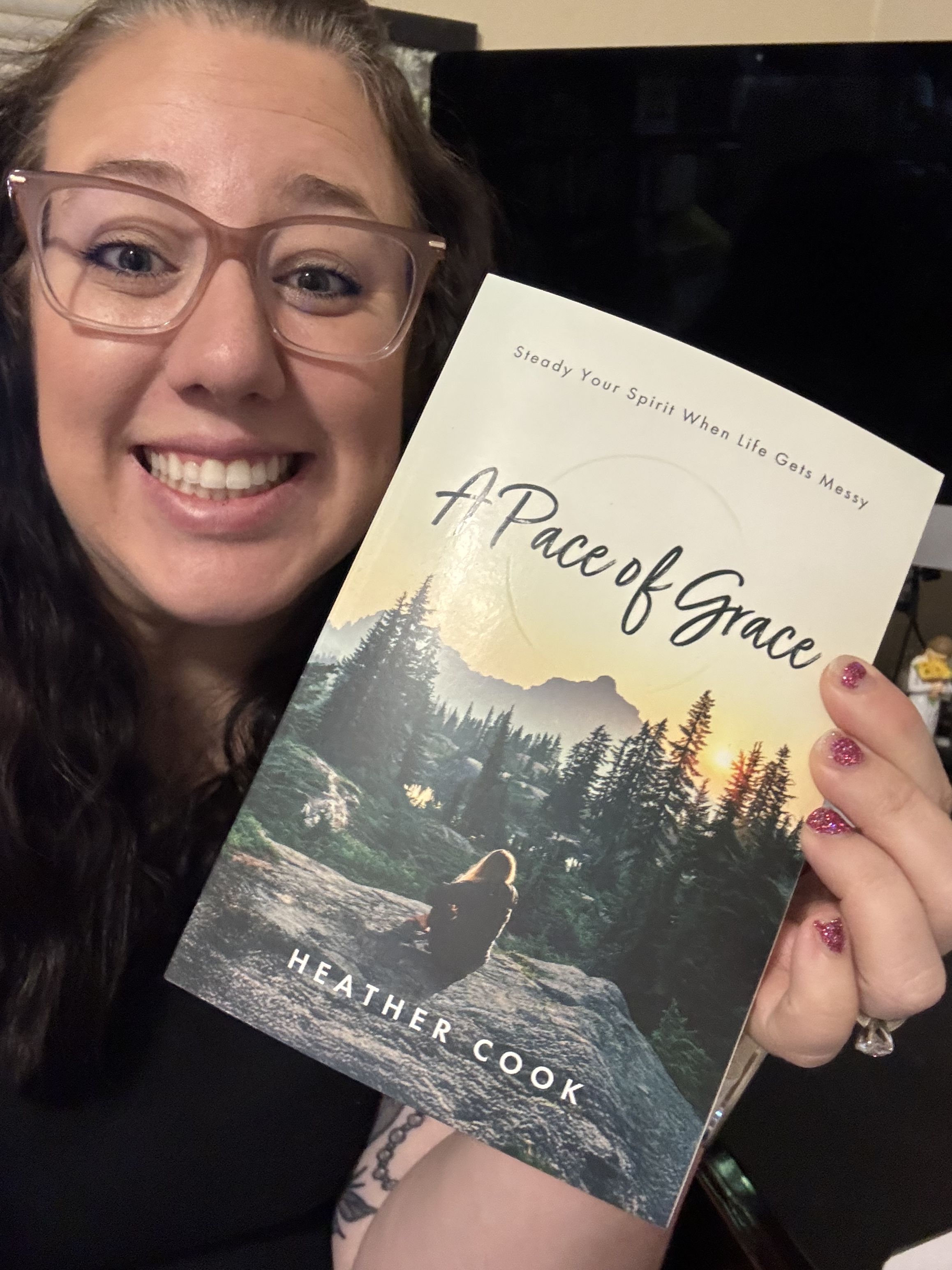
In A Pace of Grace, I write about the beauty of living in authentic community—about how vulnerability is what turns acquaintances into sisters and fellowship into family. True community happens when we choose to see one another fully, to celebrate each other’s wins without comparison, and to stand with each other through hardship.

Gratitude is what fuels that kind of connection.
When we thank God for one another, we start to see people the way He does: as image-bearers, as stories in progress, as reflections of His grace.

It’s no coincidence that so many of Paul’s letters start with thanksgiving. Gratitude has a way of softening our hearts toward one another, even in disagreement or distance. When we practice it, we reflect the heart of Christ—who saw people not for what they could give Him, but for who they were becoming through Him.


A Gentle Challenge

This week, I want to invite you to take a few minutes and thank God for the people He’s placed in your life.

Maybe it’s a longtime friend who has seen every side of you and loves you anyway.
Maybe it’s a mentor who helped you grow when you were unsure of your next step.
Or maybe it’s someone who challenged you to heal, to stretch, or to step out in faith.

Write their names down.
Pray for them.
And if you can, tell them.

There’s power in letting someone know that they’ve made a difference—that their obedience to God’s prompting mattered. You never know how much those words might mean to someone who’s been faithfully showing up.


A Prayer of Thankfulness

Lord, thank You for the people You’ve placed in my life.
Thank You for the ones who walk beside me, for those who challenge me, and for those who remind me of Your love.
Help me to see every relationship as a reflection of Your grace.
When I’m tempted to take people for granted, remind me to pause and give thanks.
And when relationships shift or fade, help me trust that You are still writing my story with purpose and care.
Amen.


Reflection Prompt:

  • Who are three people you can thank God for this week?

  • What would it look like to express that gratitude—through a note, a message, or a prayer?


🌿 A Place to Belong

If you’re longing for connection or looking for a community of women who love Jesus and cheer one another on, we’d love for you to join us. Come be part of the conversation, find encouragement, and grow with other women who are walking this journey, too.

👉 Join our Facebook community here: www.facebook.com/groups/asisterhoodofgrace

The Fruit of Rest

“I am the vine; you are the branches. If you remain in me and I in you, you will bear much fruit; apart from me you can do nothing.”
— John 15:5

We’ve spent the past month talking about slowing down—about breathing, pausing, and trusting God with the parts of life that feel like too much. But rest isn’t just about stopping; it’s about what grows when we do.

When we finally choose to rest, we start to notice something remarkable: fruit begins to form quietly in the stillness.

Peace replaces hurry.
Joy returns where anxiety once lived.
Patience grows in places we thought were barren.
And our hearts begin to soften again—toward God, toward others, and even toward ourselves.

“Rest isn’t the absence of work—it’s the presence of peace.”


The Fruit That Comes From Abiding

Jesus said that when we remain in Him—when we stay close, connected, and rooted—that’s when the fruit comes. We can’t force growth, just like we can’t make peace appear on command. But when we abide, when we rest in His love, fruit grows naturally.

Rest produces fruit that hustle never could. It creates space for spiritual depth, emotional healing, and genuine connection. It helps us move from surviving to thriving—because we’re no longer running on empty, but overflowing from His strength.


A New Kind of Productivity

The world measures success by output. God measures it by intimacy.

In His kingdom, productivity looks like patience. Success looks like faithfulness. Rest looks like trust.

Maybe that’s why Jesus could nap in the middle of a storm—because His peace wasn’t tied to what was happening around Him, but to who He was anchored to.

“When we rest, we remind the world that peace isn’t earned—it’s received.”


A Simple Step This Week

As you prepare to turn the corner into the holidays, take time to look back over this month and ask God what He’s been cultivating in you.

  • Pause and reflect. What fruit has rest produced in your life this month—peace, patience, gratitude, clarity, or healing?

  • Celebrate small growth. Write down one way you’ve seen God move in your heart through this journey.

  • Pray forward. Ask God to help you carry this rhythm of rest into the next season.


Reflection Questions

  • How has practicing rest changed the way you see your relationship with God?

  • What new fruit is beginning to grow in your life as a result of slowing down?


A Prayer for Fruitful Rest

Father, thank You for teaching me to slow down. Thank You for meeting me in the quiet and showing me that rest isn’t wasted—it’s where You do Your deepest work. Help me to remain in You so that my life bears fruit that lasts. Let peace, joy, and gentleness overflow from my time with You. In Jesus’ name, amen.


Your Turn: What fruit have you seen from choosing rest this month? Share in the comments so we can celebrate together! And as we step into the busy holiday season, remember this truth: when you stay rooted in Christ, your soul will flourish—even in the busiest seasons of life. 🌻

Rest as Worship: Emptying the Cup

“Be still, and know that I am God.”
— Psalm 46:10

A story goes that a wise monk once hosted a man known for his knowledge and endless opinions. As they sat together, the monk poured tea until the cup overflowed. Startled, the man exclaimed, “Stop! It’s already full!”

The monk smiled gently. “Exactly,” he said. “Like this cup, your mind is so full that nothing new can enter.”

That story gets me every time. Because I’ve lived with a mind that’s too full—a heart overflowing with thoughts, worries, responsibilities, and noise. My days are packed with doing, planning, and pouring out. And yet, the more I fill my schedule, the emptier I feel inside.

Maybe you know that feeling too.

“Come to me, all you who are weary and burdened, and I will give you rest.”
— Matthew 11:28

When the Cup Overflows

We think we need to manage one more task, say yes to one more thing, or push through one more week—but what we really need is space. Rest is the emptying that makes room for what truly matters.

“You can’t receive what God wants to pour in if your soul is already overflowing.”

Rest isn’t a reward for finishing your to-do list—it’s a way of saying, “God, I trust You to hold what I can’t.”

When we slow down long enough to breathe and be still, we’re reminded that the world doesn’t depend on us. God holds it all together. And in that stillness, our hearts finally have room to listen.


Rest as Worship

Rest isn’t just physical—it’s spiritual. Every time you stop striving, you’re declaring that God is enough. You’re saying, “My identity isn’t in what I do—it’s in who You are.”

“Rest is worship because it shifts the focus from what we can do to what God has already done.”

When you light a candle, close your eyes, or take a quiet walk and whisper “thank You,” that’s worship. When you turn off the noise and let your soul breathe, that’s worship. When you let go of guilt for doing less and receive God’s peace instead, that’s worship.

As we head into the holiday season—a time that tends to pull us in every direction—let’s make a conscious choice: to keep our cups half-empty so there’s room for God to fill them.


A Simple Step This Week

Here are a few gentle ways to practice rest as worship this week:

  • Reclaim quiet. Start or end your day with five minutes of silence. Let God’s presence be enough.

  • Simplify your yes. Before committing to something, pause and pray: “God, is this for this season?”

  • Name your gratitude. Write down three small things that reminded you of God’s presence this week.


Reflection Questions

  • Where in your life is your cup overflowing—and what needs to be poured out?

  • How might slowing down this week become an act of worship instead of just “self-care”?


A Prayer for a Quieted Soul

God, my heart feels full of noise and my hands are tired from holding too much. Teach me to set things down. Help me see rest not as a break from worship, but as part of it. Empty what needs to go so You can fill me with Your peace. Keep me close to Your heart as I move into this next season. Amen.


Your Turn: What’s one way you can make rest a form of worship this week? Share your thoughts in the comments—we’d love to hear how you’re finding peace in the pause. And as we head toward the holidays, remember: rest isn’t what happens when life slows down—it’s what happens when we invite God in. 💛

Rest Is Resistance

 By the seventh day God had finished the work he had been doing; so on the seventh day he rested from all his work. Then God blessed the seventh day and made it holy, because on it he rested from all the work of creating that he had done. Genesis 2:2-3

I am the vine; you are the branches. If you remain in me and I in you, you will bear much fruit; apart from me you can do nothing.
— John 15:5

There’s a phrase I’ve been holding onto lately: Rest is resistance.

In a culture that celebrates hustle and glorifies exhaustion, slowing down feels rebellious. We’re taught to measure our worth by what we accomplish, how busy we stay, and how much we can juggle before dropping something. But God offers us a completely different rhythm—one that starts with rest, not performance.

From the very beginning, He modeled it. “By the seventh day God had finished the work he had been doing; so on the seventh day he rested from all his work.” (Genesis 2:2)

God didn’t rest because He was tired. He rested because creation was complete. He looked at all He had made and called it good. Rest wasn’t the reward for His work—it was part of the work itself.


The Quiet Courage of Saying “Enough”

Rest takes courage. It means choosing to believe that your value doesn’t depend on what you produce.

“Rest says: I have nothing to prove and nothing to earn. I am already loved.”

When we stop striving, we confront the voices that tell us we’re falling behind or not doing enough. But here’s the truth—rest isn’t laziness. It’s worship. It’s trusting that God is still working even when we’re not.

Every time we rest, we declare, “The world doesn’t revolve around me—it revolves around Him.”


Redefining Success

We’ve been conditioned to chase goals, numbers, and accolades. But Jesus redefined success when He said in John 15:5, “Apart from me, you can do nothing.”

The goal isn’t to do more—it’s to abide more deeply.
When we live connected to Him, fruit happens naturally. Peace, patience, love—they flow from being rooted in His presence, not from our own effort.

So maybe rest is less about “getting ahead” and more about getting aligned.

“Rest isn’t the pause before productivity—it’s the posture of trust that fuels it.”


A Simple Step This Week

Take one intentional action that declares your trust in God’s provision this week:

  • Set a boundary. Say no to one thing that drains you. It’s okay to disappoint people to be faithful to God.

  • Plan a Sabbath window. It doesn’t have to be a full day—start with half. Turn off your phone, light a candle, go for a walk, read Scripture, laugh with your people. Let your soul breathe.

  • Redefine your win. At the end of the week, don’t measure success by what you accomplished. Measure it by how present you were—with God, with people, and with yourself.


Reflection Questions

  • What would it look like for you to resist hustle this week?

  • Where are you being invited to trust God more than your own effort?


A Prayer for Surrender

Father, thank You for modeling rest. Forgive me for believing that my worth comes from what I produce. Teach me to rest as an act of worship—to trust that You’re still working when I’m not. Help me release control, slow my pace, and abide in Your love. Amen.


Your Turn: What does “rest as resistance” look like in your life right now? Share your thoughts in the comments—we grow stronger when we rest together. And if this encouraged you, send it to someone who’s tired of striving and needs the reminder: you don’t have to earn peace—it’s already yours in Christ. 💛


God Told Elijah to Nap

Elijah was afraid and fled for his life. He went to Beersheba, a town in Judah, and he left his servant there. Then he went on alone into the wilderness, traveling all day. He sat down under a solitary broom tree and prayed that he might die. “I have had enough, Lord,” he said. “Take my life, for I am no better than my ancestors who have already died.” Then he lay down and slept under the broom tree. But as he was sleeping, an angel touched him and told him, “Get up and eat!” He looked around and there beside his head was some bread baked on hot stones and a jar of water! So he ate and drank and lay down again. Then the angel of the Lord came again and touched him and said, “Get up and eat some more, or the journey ahead will be too much for you.” So he got up and ate and drank, and the food gave him enough strength to travel forty days and forty nights to Mount Sinai, the mountain of God.
— ‭‭1 Kings‬ ‭19‬:‭3‬-‭8‬ ‭NLT‬‬

There’s a meme I saw once that made me laugh out loud: “Elijah was overwhelmed and ready to give up, so God gave him a snack and told him to take a nap.”

It’s funny because it’s true. And it’s powerful because it’s Scripture.

Elijah was exhausted—physically, emotionally, and spiritually. He had just faced down prophets, carried heavy responsibility, and then ran for his life. By the time he collapsed under a tree, he was completely done. His words in 1 Kings 19:4 are raw: “I have had enough, Lord.”

And how did God respond? Not with a lecture. Not with a pep talk. But with compassion. He sent an angel who offered Elijah food and let him sleep. Twice.


The Holiness of Sleep and Food

This story stops me in my tracks. Because sometimes, the most spiritual thing we can do is eat a real meal and go to bed early.

“Sometimes holiness looks like hydration, a good meal, and an early bedtime.”

We don’t often think of rest this way. We assume that “spiritual” means more prayer, more serving, more doing. But God designed our bodies with limits. When we ignore those limits, we run ourselves into the ground. When we honor them, we step into God’s rhythm.

Elijah’s nap and snack weren’t wasted time. They were sacred preparation. After rest, Elijah was able to hear God’s whisper and receive direction for what came next.


Trusting God With Our Limits

Our culture tells us to push harder, hustle longer, and prove our worth through productivity. But Elijah’s story reminds us that God doesn’t need our nonstop striving. What He wants is our trust.

Rest is an act of trust. When you close your laptop, turn off the light, or put down your phone, you’re saying, “God, I believe You’re still at work, even while I sleep.”

Limits aren’t weakness—they’re grace. They remind us that we are human, and God is God.


A Simple Step This Week

Here are two gentle ways to lean into God’s rhythm of rest this week:

  • Honor your bedtime. Choose one night to turn in earlier than usual. Instead of squeezing in one more chore or one more episode, choose sleep as an act of trust.

  • Eat with intention. Instead of grabbing food on the go, sit down for one meal this week without rushing. Thank God for the nourishment, and let it remind you that He provides for your needs.


Reflection Questions

  • Do you see your limits as weaknesses or as invitations from God?

  • Where in your life could you treat rest as worship instead of an afterthought?


A Prayer for the Weary

Father, thank You for creating me with limits and for caring about my whole being. Forgive me for pushing past exhaustion as if I were in control. Teach me to honor the simple gifts of food, sleep, and stillness as holy. Help me to trust You more deeply in my rest. Amen.


Your Turn: What’s one simple way you can honor your limits this week—through sleep, nourishment, or slowing down? Share it in the comments so we can encourage one another. And if this post spoke to you, send it to a friend who could use the reminder: sometimes the most spiritual thing you can do is take a nap.

When You’re Too Busy to Breath…

Then Jesus said, “Come to me, all of you who are weary and carry heavy burdens, and I will give you rest. Take my yoke upon you. Let me teach you, because I am humble and gentle at heart, and you will find rest for your souls. For my yoke is easy to bear, and the burden I give you is light.
— Matthew 11:28–30

I don’t know about you, but fall often feels like a sprint. My planner fills faster than I can flip the pages—school schedules, sports practices, ministry events, family commitments, and the unexpected things that pop up when I already feel maxed out. Some days I catch myself moving from one thing to the next so quickly that I can’t even remember how I got there. It feels like life is on fast-forward while my soul is lagging behind.

Busyness has a way of sneaking in and pretending to be normal. We shrug our shoulders and say, “That’s just life,” but deep down, our hearts know better. Because busyness doesn’t just keep us moving—it numbs us. It covers up our weariness and distracts us from what our souls need most: God’s presence.

“Numbing isn’t the same as resting. Numbing helps us escape. Rest helps us recover.”

Here’s the kicker: when I finally “make time” to rest, I don’t always feel rested. I’ll grab a night on the couch with a show or scroll endlessly on my phone, only to wake up the next day just as depleted. Have you been there? The truth is, numbing isn’t the same as resting. Numbing helps us escape for a moment. Rest helps us recover for the long haul.

And Jesus knew this. That’s why His invitation in Matthew 11:28–30 is so striking:

“Come to me, all you who are weary and burdened, and I will give you rest.”

He doesn’t say, “Come to me, and I’ll give you more strength to keep hustling.” He says, “I will give you rest.” His rest goes deeper than a nap or a break in the calendar. It’s soul-rest—the kind that reorders our hearts, re-centers our minds, and quiets the chaos within.


Choosing Rest as an Act of Trust

Here’s the hard part: choosing rest means trusting God enough to stop. It’s an act of faith to believe that the world keeps spinning even if we step off the treadmill. Rest says, “God, You’re in control. I don’t have to prove my worth with productivity.”

That’s hard to swallow in a culture that glorifies hustle. But the truth is, when our worth is tied to what we accomplish, we’ll never feel like enough.

This fall, as the calendar heats up and the holiday season starts creeping in, maybe God is inviting us into a different way. A slower, gentler rhythm. A pace of grace.


A Simple Step This Week

Instead of trying to overhaul your whole schedule, start small. Here are two ways you can practice rest this week:

 • Trade numbing for presence. Swap out one hour of scrolling or TV for silence, Scripture, or prayer. Even if it feels awkward at first, sit with it. God loves to meet us in the quiet.

 • Write yourself a permission slip. Literally. On a sticky note or card, write: “I am allowed to rest because God created me for His rhythm, not the world’s.” Keep it where you’ll see it when guilt creeps in.


Reflection Questions

 • Where do you usually run when you’re tired—toward God or toward distraction?

 • What’s one area of your life where you’re trying to prove your worth through productivity?


A Prayer for the Weary

Jesus, I am tired. The pace of life feels overwhelming, and I confess I’ve been running to distractions instead of to You. Teach me to trust You enough to stop. Quiet my soul and set my pace to match Your grace. Amen.

Your Turn: What helps you slow down when life feels relentless? Share your rhythms of rest in the comments—I’d love to hear from you. And if this encouraged you, pin it or pass it on to a friend who needs the reminder: rest isn’t indulgent—it’s holy.


The Beauty on the Other Side of Surrender

The Beauty on the Other Side of Surrender

We often fear what we’ll lose if we surrender, but we rarely imagine what we’ll gain. This final post is a testimony of what happens when we trust God with open hands. Use this space to celebrate what God has done through your yeses—big or small—and how surrender always leads to grace. Close with a blessing over your readers who are in the midst of letting go.

Slowing Down to Surrender: Why Busyness Keeps Us from Trusting God

Slowing Down to Surrender: Why Busyness Keeps Us from Trusting God

We often fill our schedules because we’re afraid of what the silence might reveal. But stillness is not just rest—it’s a declaration of trust. In this post, dive into how creating margin and choosing stillness is a bold act of surrender. Share your own rhythms for slowing down and trusting God with your time. End with a few practical tips to help readers create space for surrender in their weekly routine.

Sacred Surrender: The Obedience That Changes Everything

Sacred Surrender: The Obedience That Changes Everything

Obedience isn’t just about saying yes to God—it’s about saying no to everything that pulls us away from Him. This post explores how true surrender often shows up in daily obedience: in the unseen, quiet choices we make to follow Jesus. Talk about a season where God asked you to do something hard or unexpected, and how obedience—even when messy—led to fruitfulness. Include encouragement for those who feel stuck or scared to say yes.

When Letting Go Feels Like Losing Control

When Letting Go Feels Like Losing Control

Surrender isn’t waving a white flag in defeat—it’s choosing trust over control. In a world that glorifies hustle and hyper-independence, the call to “let go and let God” sounds like foolishness. But God’s pace often begins where ours ends. In this post, you’ll reflect on how surrendering your own plans doesn’t mean giving up—it means stepping into the peace that only comes when God leads. Share a moment from your own story when surrender led to unexpected peace.